





 +60173309581

My parents have a habit many families will recognise: when news reaches their phones, they pass it on. Even when I was a news reporter, the forwards kept coming. I never saw it as carelessness. For the older generation, sharing a warning is a way of protecting the family: a small act of care, delivered at speed.
But caring is not the same as checking. Younger people who grew up with smartphones do it too. Being good with the tools offers surprisingly little protection against the habits of the mind.
In conjunction with Global Media and Information Literacy Week, observed from 24th to 31st October, let us build the habit of questioning and verifying information before believing or sharing it online.
With a few taps, we can find answers, watch videos, read news reports or ask artificial intelligence (AI) tools to explain almost anything. But access is not judgement. As far back as 1971, economist Herbert Simon warned that a wealth of information creates a poverty of attention. Today, the scarce resource is not information, but the ability to evaluate it.
Growing up online does not automatically build that ability. In 2016, Stanford University researchers found that more than 80 per cent of middle school students in their study could not distinguish sponsored content from a real news story. Being comfortable on a platform and being critical of it are two different skills.
Digital fluency means knowing how to use digital platforms and tools. Media literacy goes further: understanding what we are looking at, who created it, why it was created and whether it deserves our trust. A fluent user can edit a video in minutes. A media-literate user also asks what the edit leaves out and who benefits from the version presented.
This distinction matters even more as AI tools generate realistic text, images, audio and video in seconds. We may believe what is false, but we may also begin doubting what is true. Legal scholars Robert Chesney and Danielle Citron (2019) call this the “liar’s dividend”: the advantage gained by dismissing genuine evidence as fake.
So why do we share before checking?
A study published in Science (Vosoughi, Roy and Aral, 2018) found that false news spreads farther and faster on Twitter than true news. Novelty and emotion can fuel sharing, while repeated exposure can make claims seem more believable, a phenomenon known as the illusory truth effect (Hasher, Goldstein and Toppino, 1977). Now picture the typical family forward: it comes from someone we trust, feels urgent and may have appeared more than once.
The answer is not to distrust everything online. Blanket suspicion is as unhelpful as blanket trust; both spare us the work of thinking. Instead, we can pause and consider five things before accepting or sharing information: context, source, intent, evidence and impact.
What is the bigger picture? Who published it? What might they be trying to achieve? What supports the claims? What could happen if we share without checking? These questions take seconds but can change how we engage with information.
Professional fact-checkers offer another useful lesson. In a 2019 Stanford study, researchers Sam Wineburg and Sarah McGrew found that fact-checkers were better at evaluating online information than historians and university students. Rather than staying on a suspicious page, they opened new tabs to investigate its source and compare other accounts. We can adopt the same habit by searching for the source and checking what other reliable outlets report.
Media literacy is not only about consuming information carefully. Anyone can publish a video, write a post or use AI to create content and reach an audience almost instantly. We are all publishers now, and that brings responsibility. Journalism’s fundamental discipline is verification: checking another source, confirming the date and asking what is missing. These habits matter to anyone who creates or shares content, including those who use AI and should be transparent about its role.
Communication education therefore has a role on both sides of the screen. Students need to assess the information they encounter while understanding their responsibilities as creators. Accuracy, context, credibility and ethical communication matter whenever we communicate online.
In the Department of Communication at Sunway Diploma Studies, we encourage students to apply these questions to what they consume and create. This might mean tracing a viral claim to its origin, comparing how different outlets report an event, or documenting project sources and acknowledging where AI has helped.
For parents and educators, media literacy can begin with simple conversations, such as asking a child where a video came from or why someone might have posted it. It works in reverse, too. Correcting a parent’s forward can feel like dismissing the care behind it. Asking, “Shall we check where this came from together?” respects the intention while encouraging better habits.
In Malaysia, Sebenarnya.my, the fact-checking portal run by the Communications Ministry and the Malaysian Communications and Multimedia Commission, offers another resource. Its AI chatbot, AIFA, can also help users check claims. As with any single source, it is best used alongside others.
Digital fluency tells us what we can do with our devices; digital wisdom tells us what we should do. The first can be picked up quickly. The second is built over a lifetime, and it begins with a pause.

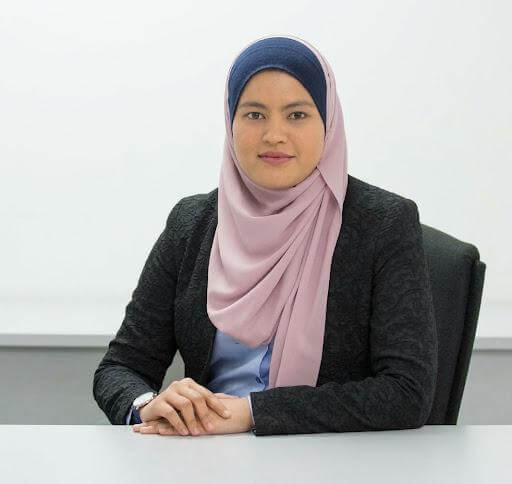
The authors are Mieza Shafieza Mohd Fuad, a lecturer at Sunway Diploma Studies, Sunway College, and Nurzalina Ramli, Head of Programme in the Diploma in Communication, Sunway Diploma Studies, Sunway College